Compare # Passive vs. Active Fire Suppression: When Each Makes Sense Passive Fire Patch Editorial Team 2026-08-07 ## Introduction
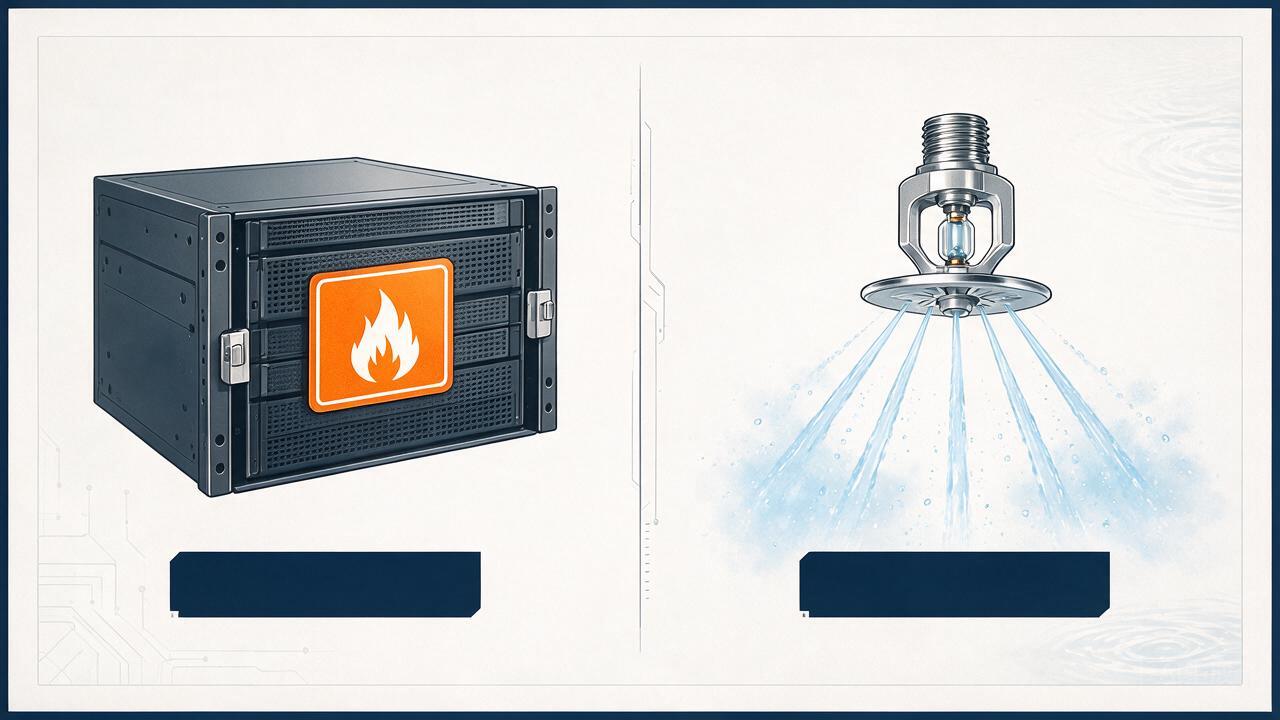
Figure 1: Passive vs. Active Fire Suppression — key differences in deployment, reaction time, and infrastructure requirements.
Fire protection engineering rests on a fundamental division between two complementary philosophies: passive fire protection (PFP) and active fire suppression (AFS). Passive systems are built into the fabric of a structure—compartmentalising, insulating, and resisting fire without mechanical or human intervention. Active suppression systems detect fire and act upon it, typically through water, gas, or chemical agents delivered by engineered equipment. The two are not competitors; they are layers in a single defence-in-depth strategy defined by codes such as NFPA 1, NFPA 13, EN 1991-1-2 (Eurocode 1, Part 1-2), and the International Building Code.
Specifiers and facility managers frequently face the same question: when does a passive barrier deliver better life safety and asset protection than a sprinkler system, and vice versa? The honest answer is that both have domains where they excel and domains where they fail outright. A 600 mm reinforced concrete slab will outperform any sprinkler on the planet at holding a hydrocarbon pool fire at bay for four hours; a residential smoke alarm and water-mist nozzle will outperform any intumescent coating at saving lives in a sleeping occupancy. Choosing correctly requires understanding what each system physically does to a fire, how it fails, and how it integrates with the building’s risk profile.
This article compares passive and active suppression across the dimensions that matter to engineers: reaction time, performance envelope, lifecycle cost, inspection burden, and code compliance. It draws on test data from standards such as UL 263, EN 1364, ISO 834, and the hydrocarbon fire curves used in petrochemical facilities. The goal is to give the reader a defensible framework for selecting the right balance—not the right vendor, and not the right buzzword.
Defining the Two Philosophies
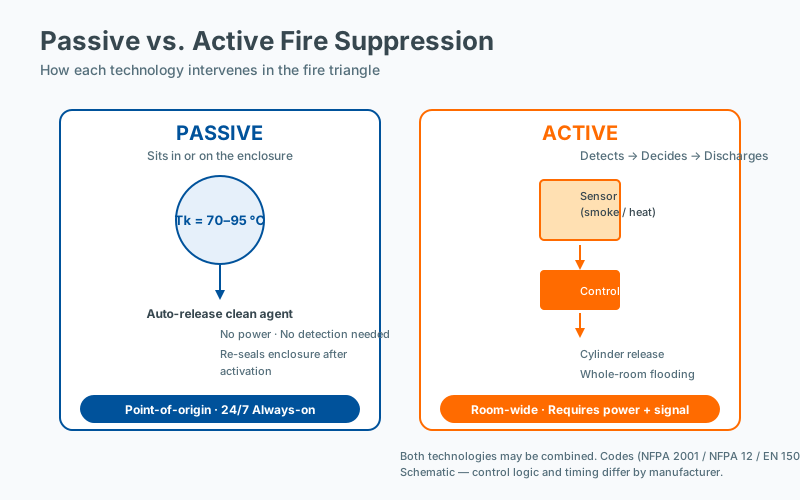 Passive vs active fire suppression
What Passive Fire Protection Actually Does
Passive fire protection is a set of built-in features that resist the passage of flame, heat, and smoke for a specified period without any moving parts. The defining characteristic is that the protection is always on. There is no detector to fail, no pump that requires power, no valve that must open. PFP includes:
- Structural fire protection: Spray-applied cementitious coatings, intumescent paint, mineral wool, calcium silicate, and concrete encasement protecting steel and reinforced concrete from reaching critical temperatures (typically 550 °C for structural steel per Eurocode 3 Part 1-2).
- Compartmentation: Fire-resisting walls, floors, and ceilings tested to rating periods of 30, 60, 90, 120, or 240 minutes under standards such as EN 1366 and ASTM E119.
- Opening protectives: Fire doors, fire-rated glazing, and firestopping systems (intumescent collars, mineral wool pillows, elastomeric sealants) that maintain the integrity of compartmentation where services penetrate.
- Smoke barriers and smoke seals: Curtains and gaskets that limit smoke migration before active systems engage.
The fire resistance rating is expressed in minutes and corresponds to one or more of three criteria: stability (load-bearing capacity), integrity (no through-gap flaming or hot gases), and insulation (average temperature rise on the unexposed face limited to 140 °C above ambient, with maximum 180 °C at any point).
What Active Fire Suppression Actually Does
Active suppression refers to engineered systems that detect a fire and deliver an extinguishing or control agent. The defining characteristic is deliberate intervention. Detection may be by smoke, heat, flame, gas, or aspiration; delivery may be automatic, manual, or both. Common categories include:
- Water-based: Sprinklers (wet, dry, deluge, pre-action, ESFR), water mist, hydrant and hose systems, and water spray (deluge) for industrial exposures.
- Gas-based: Clean agent systems using FK-5-1-12, HFC-227ea, Novec 1230, or inert gases (IG-01, IG-100, IG-55, IG-541) for occupied enclosures; CO₂ for unoccupied spaces.
- Foam: AFFF, AR-AFFF, protein, and fluorine-free foams for hydrocarbon and polar solvent hazards per NFPA 11 and EN 13565.
- Powder and aerosol: For specialised applications such as engine bays, machinery spaces, and electrical cabinets.
Active systems are governed by a different metrics framework: design density (mm/min or g/m²), discharge time (typically 60–120 seconds for clean agents), concentration (e.g., 5.8 % by volume for FK-5-1-12 on Class A surface fires), and reliability (expressed through reliability indices in FM Global Data Sheets and reliability block diagrams per ISO 12100).
Performance Comparison Across Critical Parameters
Reaction Time
Passive systems have zero reaction time—they are already in place when ignition occurs. They begin “performing” from the moment of flame contact and their performance is governed entirely by material chemistry and mass. Intumescent coatings begin expanding at approximately 200 °C and reach full char thickness between 300 °C and 400 °C.
Active systems have an inherent delay chain: detection (seconds to minutes), decision (control panel logic, typically <30 s), and discharge initiation (valve opening, <60 s). A standard wet-pipe sprinkler head activates thermally within 30–90 seconds of reaching its activation temperature (typically 68 °C for ordinary rating), with subsequent water delivery within 60 seconds per NFPA 13. Aspirating smoke detection can shorten the detection phase to under 10 seconds, but the physical delays in valve actuation remain.
For fast-growing fires with a t² growth coefficient above 0.05 kW/s² (medium to fast per NFPA 72), active suppression must engage before the fire reaches flashover—generally within 60–180 seconds of ignition—or it will lose control.
Performance Envelope
Passive systems protect structure and compartmentation indefinitely, up to their tested rating. An EN 1364-tested non-loadbearing wall rated EI 120 will resist a fully developed fire for two hours, after which performance degrades. For petrochemical applications, the hydrocarbon HCM fire curve reaches 1100 °C within 30 minutes; passive systems rated to that curve (e.g., UL 1709, ISO 22899-1 jet fire) demonstrate endurance that no active system can match in a continuous-flow scenario without replenishment.
Active systems are agents of fire control or extinguishment, not structural endurance. A sprinkler system is typically designed to control—not extinguish—a fire, limiting it to 1–3 heads operating until the fire service arrives. This is a critical distinction in loss estimation: passive protection limits structural loss and business interruption duration, while active suppression limits content loss and surface damage. Together, they produce a building that resists fire for hours and a fire that is attacked in seconds.
Reliability and Failure Modes
Passive systems fail through degradation: coating delamination, missing or damaged seals, services penetration that was never firestopped, door closers removed for convenience. Inspection cycles per NFPA 80 (annual fire door inspection) and NFPA 25 (water-based systems) cover both, but PFP failures are primarily human in nature—often traceable to construction defects or maintenance omissions.
Active systems fail through component failure: blocked sprinkler heads, closed valves, fouled detectors, failed pumps, and—most commonly—inadequate water supply. FM Global loss data indicates that approximately 30 % of sprinkler system failures involve shut valves. Reliability analysis per IEC 61508 and ISO 12100 assigns probability of failure on demand (PFD) values to active systems, generally between 1×10⁻² (unmaintained) and 1×10⁻⁴ (well-maintained with redundant power and water supplies). Passive protection, when installed correctly, has a PFD effectively approaching zero during its rated period.
Lifecycle and Inspection Cost
Independent analyses by the Building Research Establishment and the National Research Council of Canada consistently find that PFP accounts for less than 1–2 % of total building cost, with a service life of 20–50 years depending on coating type. Inspection is visual and annual, with intrusive inspection only every 5–10 years.
Active suppression systems cost 2–5 % of building cost, with annual inspection costs typically 1–3 % of installation cost, and full system service every 10–25 years (valves, pumps, agent replacement for clean agents). Clean agents require pressure testing and refilling after discharge, with leak detection systems required by NFPA 2001.
The economic comparison is therefore not “passive is cheaper than active.” It is that passive provides a lower total cost of ownership but cannot, on its own, save lives in a fast-growing fire; active provides immediate intervention but requires continuous maintenance to remain reliable.
Application Domains: Where Each Excels
Passive Dominates
- Structural protection in high-rise buildings: Core stability, lift shafts, and escape routes per EN 1991-1-2 require sustained insulation that only compartmentation can deliver.
- Petrochemical and offshore installations: Where hydrocarbon pool and jet fires can reach 1300 °C in minutes, passive fire protection (epoxy intumescent, cementitious, or mineral wool systems tested to UL 1709) provides the 2–4 hour endurance that active water spray cannot maintain without unlimited water supply.
- Data centres and telecoms rooms: Where water damage is itself a critical concern, passive compartmentation isolates any fire event, often paired with very early smoke detection apparatus (VESDA) and clean agent systems.
- Historical and heritage buildings: Where intrusive systems cannot be installed, passive solutions preserve the structure without mechanical intervention.
Active Dominates
- Residential and sleeping occupancies: NFPA 13R and 13D sprinkler systems are widely documented to reduce civilian fire fatality rates by 80–87 % per NFPA research.
- Warehousing with high-challenge storage: ESFR sprinklers (K-factor 25.2 and above) are capable of controlling storage of Class 1–4 commodities to heights exceeding 12 m—something no passive system can achieve.
- Process industry and machinery spaces: Where rapid flame spread, flammable liquids, and rotating equipment require fast suppression, foam deluge or clean agent systems respond in seconds.
- Server rooms under 600 m²: Clean agent systems per NFPA 2001 / ISO 14520 extinguish fire without residue, preserving equipment that passive compartmentation would simply contain while it burns.
Hybrid Is the Norm
In practice, virtually every modern building uses both. A hospital combines 2-hour fire-resisting compartmentation (passive) with sprinklers per NFPA 13 and clean agent systems for MRI and operating theatres (active). A skyscraper combines structural fire protection of the steel frame (passive) with a wet-pipe sprinkler system (active) and a smoke management system (active). The design question is never “passive or active”; it is “how much of each, and where?”
Code Frameworks and the Compliance Trigger
North America
The International Building Code, NFPA 1, and NFPA 101 require both passive and active measures, with prescriptive triggers based on occupancy classification, height, area, and use. For example, Group B (business) occupancy over 75 ft in height generally requires a Class I automatic wet standpipe system, while NFPA 13 may trigger sprinkler requirements based on fire area exceeding a threshold (typically 5,000 sq ft for light hazard). NFPA 13 also mandates fire-rated construction of certain concealed spaces.
Europe
Eurocode 1 Part 1-2 defines the thermal actions on structures, with member-level performance verified under EN 1992-1-2 (concrete), EN 1993-1-2 (steel), and EN 1994-1-2 (composite). EN 13501-2 classifies fire resistance, and BS 9999 / EN 1991-1-2 combine active and passive requirements through risk-based engineering. Sprinkler installations follow EN 12845, with the trade-off recognised by BS 7974 (Application of fire safety engineering principles) where sprinklers may permit extended travel distances or reduced compartmentation ratings.
Middle East
UAE Fire and Life Safety Code of Practice, Saudi Arabia’s Civil Defense requirements, and Qatar’s National Fire Protection Association adoption combine NFPA-derived standards with local petrochemical-specific provisions from API 2510 and NFPA 15 (water spray fixed systems). High-rise and industrial facilities typically face the strictest passive requirements, with active systems required wherever life safety risk is high.
The key compliance insight is that most codes treat passive protection as the default and active suppression as an additional layer. Removing passive protection in exchange for active suppression is rarely permitted; reducing passive ratings through the use of active systems is more common, but requires engineering justification per BS 7974 or the International Fire Engineering Guidelines.
Decision Framework for Engineers and Facility Managers
When evaluating a project, the engineer should answer four questions:
- What is the fire growth rate? Fast-growing fires (t² > 0.05 kW/s²) require active suppression; slow-growing, smouldering, or shielded fires are well-managed by passive compartmentation.
- What is the consequence of system failure? If failure leads to immediate life loss (sleeping occupancies, healthcare), redundant active suppression with high reliability is justified. If failure leads to asset loss with adequate egress time, passive protection is sufficient.
- What is the duration requirement? Active systems can suppress within minutes but require post-event servicing. Passive systems protect for hours but require post-event replacement only of damaged portions.
- What does the code demand? Prescriptive compliance always takes precedence; engineering judgments via performance-based design (BS 7974, SFPE Handbook, NFPA 101 Appendix C) should only be used where the baseline is already met.
A defensible specification typically combines 60–120 minute passive compartmentation with a wet-pipe sprinkler system in commercial buildings; 120–240 minute structural protection with deluge or foam systems in petrochemical facilities; and 30–60 minute passive ratings with clean agent suppression in data centres.
Conclusion
Passive and active fire suppression are not opposing choices but engineering complements. Passive fire protection provides always-on structural endurance and compartmentation that no detection or discharge delay can match. Active suppression provides immediate intervention that no passive barrier can deliver. Codes recognise both, and the most resilient facilities use them in layers matched to occupancy, hazard, and consequence. The engineer’s task is to right-size each layer—not to favour one philosophy over the other—and to maintain both rigorously for the lifetime of the building.
Frequently Asked Questions
How do I evaluate which technology fits my specific hazard?
Start with a structured risk assessment: identify the fire load, credible ignition sources, and propagation pathways. Then match the suppression technology's tested performance to that hazard profile (enclosure volume, fire growth class, agent compatibility, and installation environment). Standards-based engineering judgment, supported by manufacturer data and third-party listings, is more reliable than generic comparison tables.
Are there hybrid systems that combine multiple suppression approaches?
Yes. Hybrid designs that combine passive point-of-origin suppression with active detection-and-flooding, or that combine a gaseous system with a pre-engineered aerosol, are used in higher-hazard enclosures. The key is to verify that the combined systems do not interfere with one another and that the design as a whole meets the relevant standard for the application.
Can two different suppression technologies be used in the same enclosure?
In principle, yes, if both are designed for the same protected volume and the combined agent concentrations remain within the safety limits for the enclosure. In practice, interaction effects between agents are not always well characterized, and most manufacturers recommend a single primary technology per enclosure. Engineering analysis and AHJ acceptance are required for hybrid designs.
What is the most overlooked factor in suppression technology selection?
Compatibility of the suppression agent with the equipment being protected: electrical compatibility for energized systems, residue tolerance for clean-electronics environments, and pressure-rise tolerance for sealed enclosures. Many selection decisions focus on agent volume and ignore these compatibility questions until after an incident.